
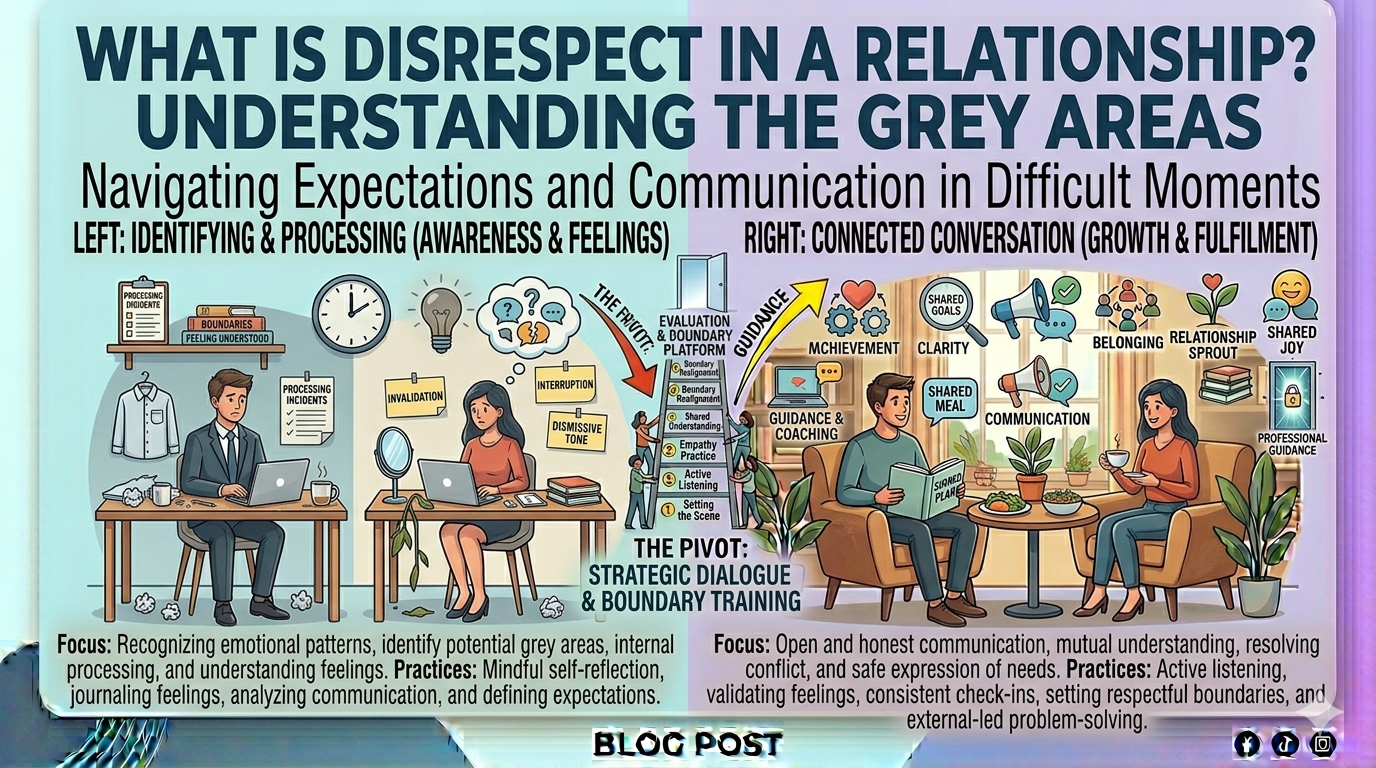
In modern dating, the word disrespect gets used very quickly. A delayed reply, a joke, or a disagreement can sometimes be labelled as a red flag. But is every uncomfortable moment truly disrespect? Understanding the difference between real and trivial disrespect is essential for building healthy relationships and avoiding unnecessary breakups.
What Does Disrespect Really Mean?
Disrespect in a relationship refers to behavior that undermines your dignity, emotions, or boundaries. It is not just about what happens, but also about intent, pattern, and impact.
However, one of the biggest challenges today is that people often confuse momentary discomfort with actual disrespect. This is where emotional awareness becomes crucial.
Real vs Trivial Disrespect: The Core Difference
To build clarity, let’s break this into two categories:
1. Real Disrespect (Red Flags You Should Not Ignore)
These are behaviors that consistently harm your emotional well-being and signal deeper issues:
- Repeatedly insulting or humiliating you
- Mocking your insecurities or appearance
- Interrupting or dismissing your feelings regularly
- Disrespecting your family, values, or boundaries
- Gaslighting or making you question your reality
- Patterns of rude or controlling behavior
👉 Key point: Real disrespect is usually consistent, intentional, and emotionally damaging.
If these signs of disrespect appear repeatedly, they are not small issues—they are warning signals. Ignoring them can damage your self-esteem and mental health over time.
2. Trivial or Situational Disrespect (Often Misinterpreted)
Not every uncomfortable moment is a red flag. Some behaviors fall into a grey area:
- A partner replying late due to work
- A poorly timed joke that wasn’t meant to hurt
- Occasional disagreements or tone mismatch
- Forgetting something once in a while
- Being distracted during a conversation occasionally
👉 Key point: These are often isolated incidents, not patterns.
In many cases, these situations are influenced by stress, mood, or miscommunication—not a lack of respect.
Why Do We Confuse the Two?
Modern dating culture has made people more alert—but sometimes over-alert. Here’s why confusion happens:
1. Emotional Triggers
Past experiences or insecurities can make small actions feel bigger than they are.
2. Social Media Advice
“Leave at the first red flag” sounds empowering, but it oversimplifies complex human behavior.
3. Lack of Communication
Instead of clarifying intent, people often assume the worst.
4. Fear and Ego
Sometimes, labeling something as disrespect is easier than addressing vulnerability.
This is where emotional awareness plays a critical role—understanding your feelings without jumping to conclusions.
How to Identify True Signs of Disrespect
To avoid overthinking, ask yourself these questions:
- Is this behavior repeated or a one-time incident?
- Was there clear intent to hurt or demean?
- How does this make me feel over time?
- Have I communicated my discomfort clearly?
- Did my partner acknowledge and correct the behavior?
If the issue continues even after communication, it likely falls under real disrespect.
The Role of Communication in Healthy Relationships
Before labelling something as disrespect, communication is essential.
Instead of reacting immediately:
- Express how you felt
- Ask for clarification
- Observe their response
A partner who values healthy relationships will:
- Listen without defensiveness
- Acknowledge your feelings
- Make an effort to improve
On the other hand, repeated dismissal or denial is a stronger indicator of disrespect than the original act itself.
When Should You Take It Seriously?
A practical rule you can follow:
👉 Don’t tolerate repeated disrespect.
Everyone makes mistakes, but patterns reveal character.
- One mistake → conversation
- Repeated behavior → concern
- Continued pattern → decision point
This approach helps you stay balanced—neither overly tolerant nor impulsive.
Building Emotional Awareness in Relationships
To navigate these grey areas effectively, you need to strengthen your emotional awareness:
- Recognize your triggers
- Separate feelings from facts
- Avoid instant assumptions
- Stay open to dialogue
- Reflect before reacting
This not only improves your relationships but also protects you from unnecessary stress and confusion.
Final Thoughts
Understanding the difference between real and trivial disrespect is key to maintaining healthy relationships. Not every uncomfortable moment is a dealbreaker, but repeated patterns should never be ignored.
By focusing on signs of disrespect, practicing emotional awareness, and prioritizing communication, you can make more grounded relationship decisions.
In the end, the goal is not perfection—it’s mutual respect, understanding, and growth.
Reply here