
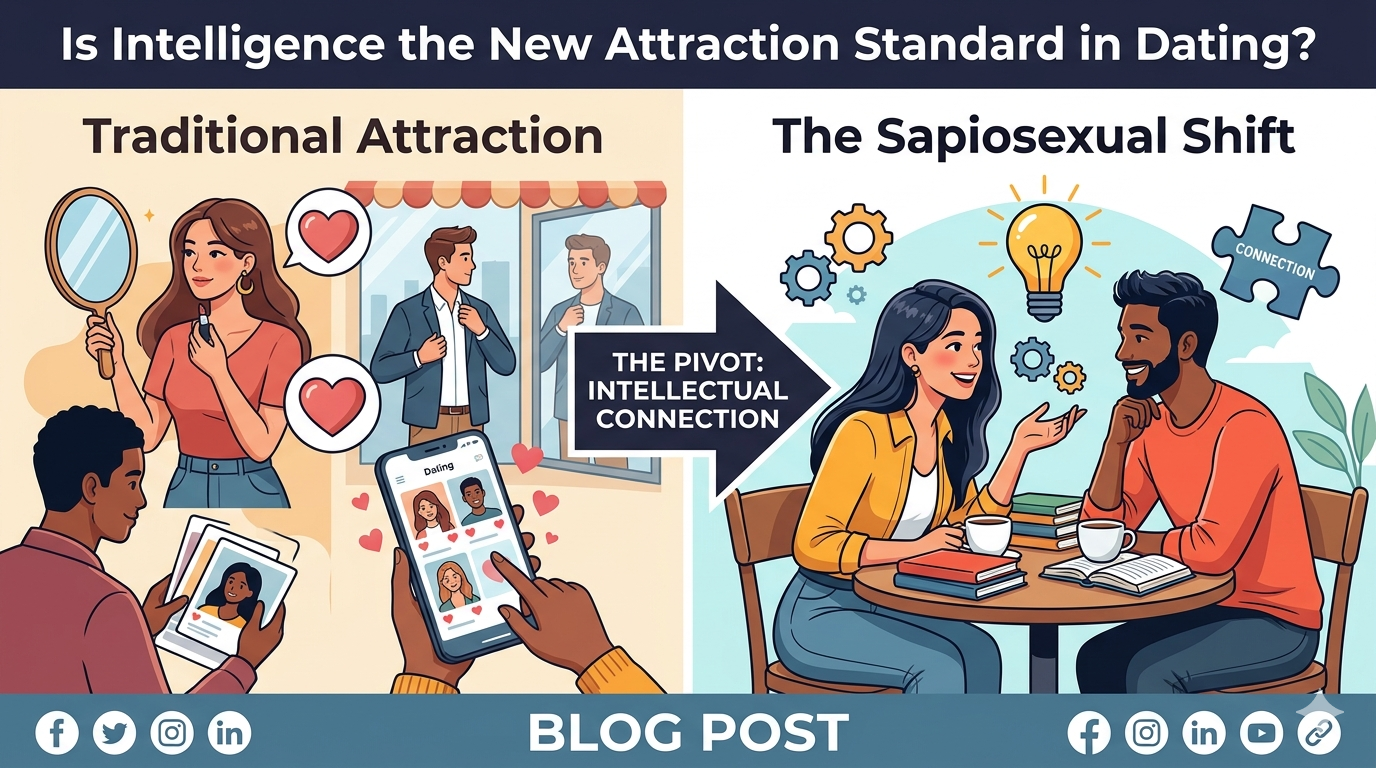
In today’s fast-evolving dating landscape, attraction is no longer defined solely by looks or charm. A growing trend suggests that intelligence is becoming a key factor in romantic interest. The concept of sapiosexuality—being attracted primarily to intelligence—has gained popularity, especially in urban dating circles and on digital platforms. But is intelligence truly the new benchmark for attraction, or is this just another modern dating label?
The Rise of Sapiosexual Dating
Sapiosexuality, once a niche term, is now widely used in dating profiles and conversations. Many individuals describe themselves as being more attracted to intellect than physical appearance. The appeal lies in stimulating conversations, shared curiosity, and mental compatibility.
In theory, this sounds like a positive shift. Prioritizing intelligence could mean valuing meaningful connections over superficial attraction. However, in practice, sapiosexual dating often becomes more about perception than genuine compatibility. People may claim to seek intelligence, but what they really mean is a preference for articulate communication, confidence, or even social status.
This raises an important question: Are people truly attracted to intelligence, or to how intelligence is presented?
Intelligence as a Dating Filter
One of the most noticeable aspects of modern dating trends is how intelligence is being used as a filter—especially on dating apps. Profiles now frequently highlight interests like reading, philosophy, or intellectual debates. Phrases like “I value deep conversations” or “looking for someone intellectually stimulating” have become common.
While these preferences are valid, they can sometimes create unrealistic expectations. Not every meaningful relationship begins with profound discussions. In fact, many strong connections start with light, casual interactions that gradually deepen over time.
By placing too much emphasis on intelligence upfront, daters may unintentionally overlook emotional compatibility, kindness, or shared values—factors that are equally, if not more, important for long-term relationships.
The Appeal of Deep Conversations
There is no denying the charm of deep conversations in relationships. Talking about life goals, beliefs, and personal experiences can create a strong sense of intimacy. Intellectual connection can make interactions feel exciting and fulfilling.
However, the idea that every interaction must be “deep” can become exhausting. Relationships are not built solely on intense discussions. They also thrive on humor, comfort, and even silence.
In some cases, the pressure to appear intelligent or engaging can lead to performative behavior. Instead of being authentic, individuals may try to impress their partner with complex ideas or opinions. This can create a disconnect between who they are and how they present themselves.
Is Intelligence Replacing Emotional Chemistry?
One unintended consequence of this trend is the gradual sidelining of emotional chemistry. While intelligence can create attraction, it does not automatically translate into emotional connection.
Emotional chemistry involves empathy, understanding, and the ability to connect on a human level. It is what helps partners navigate conflicts, support each other, and build trust. Without it, even the most intellectually stimulating relationship can feel incomplete.
In fact, focusing too much on intelligence can sometimes lead to overanalysis. People may start evaluating conversations instead of experiencing them, turning dating into a mental exercise rather than an emotional journey.
The Urban Dating Influence
The rise of sapiosexuality is particularly noticeable in urban environments. Fast-paced lifestyles, exposure to diverse ideas, and the influence of social media have all contributed to this shift.
In these settings, intelligence is often associated with ambition, success, and sophistication. As a result, it becomes a desirable trait not just for connection, but also for social positioning.
However, this can create a subtle form of exclusivity. When intelligence is treated as a primary attraction standard, it may unintentionally exclude individuals who express themselves differently or come from varied educational or cultural backgrounds.
Finding the Right Balance
While intelligence is undoubtedly an attractive quality, it should not be the sole معيار for choosing a partner. A healthy relationship is built on a combination of factors, including emotional compatibility, mutual respect, and shared values.
Instead of asking, “Is this person intelligent enough?” a more balanced approach would be, “Do I feel understood and comfortable with this person?”
At Counselling Deck, we believe that meaningful connections come from authenticity, not checklists. Intelligence can enhance a relationship, but it cannot replace emotional depth and genuine care.
Final Thoughts
The growing emphasis on sapiosexual dating reflects a broader shift in modern dating trends, where people are seeking more meaningful and stimulating connections. While this is a positive development, it is important to avoid turning intelligence into a rigid filter.
True attraction is multi-dimensional. It includes intellectual curiosity, emotional warmth, and the ability to connect beyond words. Deep conversations may spark interest, but it is emotional understanding that sustains relationships.
In the end, the goal is not to find the smartest person in the room—but the one with whom you can be your most authentic self.
Reply here