
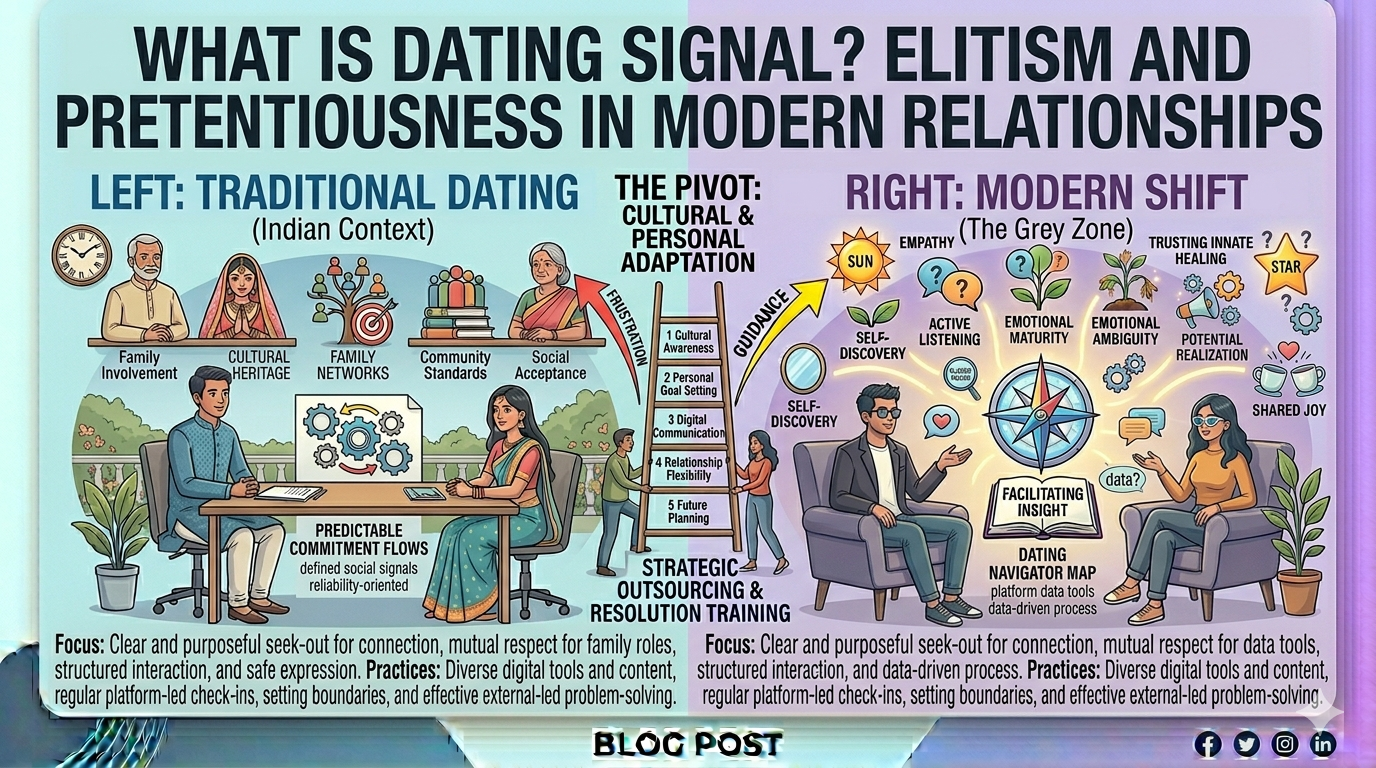
Modern dating is no longer limited to emotional connection or compatibility. In today’s digital culture, people often use preferences, lifestyle choices, and relationship expectations as a way to project social status. This growing trend is sometimes referred to as a “dating signal.” It raises an important question: Are dating preferences becoming a form of social signaling?
For many people, the answer is yes. In urban dating culture and on social media-driven platforms, attraction is increasingly tied to image, intellect, career success, and curated personalities. While preferences are natural, they can sometimes cross into elitism and pretentiousness, making dating feel competitive instead of meaningful.
What Is a Dating Signal?
A dating signal refers to the subtle ways people communicate their social identity, status, values, or lifestyle through their dating preferences. Instead of simply looking for compatibility, some individuals use dating choices to showcase sophistication, intelligence, financial class, or cultural superiority.
Examples include:
- Prioritising partners only from elite educational backgrounds
- Rejecting people based on profession or income level
- Valuing “deep intellectual conversations” mainly for image
- Treating luxury lifestyles as relationship standards
- Using niche hobbies or cultural tastes as social filters
In many cases, these preferences are not entirely about connection. They become tools of social signaling.
How Social Media Influences Dating Preferences
Social media has transformed modern dating psychology. People constantly observe curated relationships online, where couples display luxury travel, aesthetic lifestyles, intellectual branding, or “perfect compatibility.” This creates pressure to choose partners who improve one’s public image.
As a result, dating can become performative. Instead of asking:
“Do I genuinely connect with this person?”
People may unconsciously ask:
“How does this relationship make me look socially?”
This behavior contributes to emotional distance and unrealistic expectations in relationships.
The Link Between Elitism and Modern Dating
Elitism in dating appears when individuals believe certain traits make someone more worthy of love or respect. Education, English fluency, social circles, income, or cultural exposure often become markers of desirability.
While having standards is healthy, problems begin when preferences turn into superiority complexes.
For example:
- Looking down on people with simple lifestyles
- Treating emotional warmth as less valuable than intellectual image
- Judging compatibility mainly through status markers
- Confusing emotional maturity with social sophistication
This form of dating behavior can make relationships shallow and transactional.
Is Pretentiousness Replacing Authenticity?
Pretentiousness in relationships happens when people exaggerate interests, values, or personalities to appear more desirable. Some individuals pretend to be emotionally unavailable, intellectually superior, or “too evolved” for ordinary connection.
In reality, many people still seek basic emotional needs:
- Care
- Respect
- Safety
- Understanding
- Emotional support
Healthy relationships are built on authenticity, not performance.
The Emotional Impact of Social Signaling in Dating
When dating becomes socially competitive, it can create:
- Anxiety about self-worth
- Fear of rejection based on status
- Emotional burnout from unrealistic standards
- Difficulty forming genuine connections
This is where counselling sessions and emotional awareness become important. Professional counselling services can help individuals understand whether their preferences come from genuine compatibility or social conditioning.
Building Healthier Dating Habits
To create meaningful relationships:
- Focus on emotional compatibility over image
- Avoid comparing relationships online
- Value kindness and communication
- Question whether preferences are authentic or performative
- Practice emotional honesty during dating
Real connection rarely comes from status signaling. It grows through mutual respect, trust, and emotional understanding.
Conclusion
Dating preferences are natural, but modern culture has turned many of them into social signals. Elitism and pretentiousness in dating often reflect deeper insecurities and social competition rather than genuine compatibility.
At CounsellingDeck, we believe healthy relationships begin with authenticity. The more people move away from performative dating and toward emotional awareness, the more fulfilling modern relationships can become.
Reply here